
Hiring in the Netherlands Without an Entity: Your Options
By Joost Hubregtse, Director, ICS Staffing & Payroll
All blog posts are reviewed and fact checked by our labour law lawyer Zishan Hussain and our director. Editorial standards
A Dutch entity is not the only route into the Dutch labour market. Hiring employees in the Netherlands without an entity is possible through an Employer of Record (EOR), which employs staff locally on your behalf. Other options include establishing a Dutch entity or engaging genuinely independent contractors. The right route depends on your plans, the role and whether the working relationship is employment or genuinely self-employed.
Setting up a local entity may seem like the straightforward option, but it is not the only way to employ staff in the Netherlands. An EOR can employ Dutch-based staff without your company first establishing its own Dutch entity. Contractors are appropriate only when the working relationship is genuinely independent. Dutch authorities assess how the work operates in practice, including the company’s direction and the worker’s commercial risk.
This article explains what an EOR does in the Netherlands, how it compares with a local entity and independent contracting, and what to consider when choosing a route. You’ll get a clearer picture of the compliance responsibilities involved and which approach may suit your hiring plans.
Key Takeaways
- You can employ Dutch-based staff through an EOR or a local entity; the best fit depends on your operating plans and employment needs.
- An EOR becomes the legal employer, while your company directs the employee’s day-to-day work.
- Contractor status depends on how the working relationship operates, including the degree of direction and the worker’s commercial risk.
- A local entity brings its own registration and payroll obligations, so consider tax consequences when choosing a business structure.
- Prepare employee and role information for onboarding, including identity and work-eligibility details needed to establish employment and process payroll.
Must Foreign Employers Use a Local Entity to Hire?
No. A foreign employer can hire Dutch employees through an EOR without first setting up a Dutch entity. The arrangement determines which organisation employs the worker and handles payroll, while Dutch employment rules can still apply to staff working in the Netherlands.
Hiring Through an Employer of Record
An Employer of Record (EOR) employs a worker in the Netherlands on behalf of a foreign company, so the company does not need to establish its own Dutch entity first. The foreign company directs the employee’s work, while the EOR is the legal employer responsible for local employment administration.
This structure can suit a business hiring a small team in the Netherlands while considering longer-term expansion. It separates the immediate decision to employ someone from the decision to establish a Dutch business structure. The foreign company must still consider its tax position, particularly whether the employee’s activities create a Dutch permanent establishment.
Third-Party Employment and Payrolling Rules
Third-party employment places a worker on an intermediary’s payroll while another company directs the work. The Dutch Act on Allocation of Workers by Intermediaries (WAADI) governs the allocation of workers through intermediaries. The arrangement needs to reflect the actual employment relationship, not just the name used in an agreement.
The Government of the Netherlands’ payrolling guidance explains that payrolled workers must receive the same employment conditions as directly employed workers at the hiring company for pension and other secondary conditions. This rule has applied since the WAB took effect in January 2020. Payrolling is distinct from independent contracting, where the worker operates as a business rather than as an employee assigned through an intermediary.
Dutch BV, Freelancers, and Payrolling Compared
A Dutch BV is a local legal entity that can employ staff directly and take responsibility for Dutch payroll and employment obligations. It may suit a company planning sustained operations in the Netherlands, but setting up a BV is a separate business-structure decision. A foreign employer can also hire through an EOR without incorporating a Dutch BV.
A freelancer works independently, so this route is suitable only when the working relationship is genuinely self-employed. Dutch authorities assess whether the worker must perform the work personally, whether the company directs how and when it is done, and whether the worker bears commercial risk or serves multiple clients. Payrolling, by contrast, places an employee with an intermediary.
Tax Presence and Payroll Reporting
Not having a Dutch entity does not automatically remove Dutch tax or payroll obligations. A foreign company with a permanent establishment in the Netherlands may need local payroll registration, even without a registered Dutch entity. The employee’s role and activities can affect whether the foreign company creates a permanent establishment and becomes liable for Dutch corporate taxes.
Employers hiring personnel for the first time must register with the Belastingdienst, the Dutch Tax Administration. They must also determine how Dutch wage tax and social security contributions will be withheld and reported. An EOR can handle payroll administration, while an employer using its foreign entity remains responsible for its Dutch reporting obligations.
Work permit requirements depend on nationality and residence status. Dutch, EEA and Swiss nationals are exempt from the stated residence and employment permit requirements. Other foreign employees generally need permission to live and work in the Netherlands; the Immigration and Naturalisation Service (IND) provides information on permits.
What is an Employer of Record (EOR) and how does it work in the Netherlands?
An EOR is the legal employer, while the client company directs the employee’s day-to-day work. For an international employer, this arrangement separates local employment administration from the company’s own operations in the Netherlands.
EOR Services and Responsibilities
The EOR manages employment administration, including payroll and statutory employer tasks. Dutch employers must handle payroll taxes, and applicable social insurance contributions form part of the payroll obligations. The EOR’s role is to administer these matters for the employment relationship it holds.
The EOR also administers employment benefits that apply to the worker. The employment agreement documents the specific terms, which must reflect applicable Dutch requirements. This division matters because the EOR is the formal employer, not merely a payroll processor calculating payments for another employer.
The client company provides the business context for the role, including responsibilities and day-to-day direction. The EOR uses the agreed employment terms to maintain the employment record and administer payroll. Clearly allocating these tasks helps ensure formal employment administration reflects how the work is managed.
How EOR Arrangements Work
In an EOR arrangement, the EOR is the legal employer, while the client company directs the employee’s work. A professional employer organization typically has a co-employment role rather than acting as the sole legal employer. This distinction clarifies which party holds the formal employment relationship.
The employee performs work for the client company, which sets role priorities and provides operational direction. The EOR administers the employment relationship, including employment documentation and payroll. Each party therefore has a distinct role, and the client company continues to manage the employee’s day-to-day work.
For a company entering the Netherlands, an EOR can provide a way to employ a Dutch-based worker before establishing its own local entity. The company defines the position and working arrangements, then the EOR documents the employment relationship and handles its assigned employer responsibilities.
An EOR arrangement is an employment relationship, not a substitute label for independent contracting. The contract and the actual working arrangement need to match, including who employs the worker and who directs the work. This distinction helps the company choose a structure that fits its operating model.
How an EOR employs workers in the Netherlands without a local entity
An EOR lets a foreign company employ a worker in the Netherlands through a local employment relationship without first establishing its own Dutch entity. The foreign company can agree the business assignment through its existing entity, while the EOR handles local employer administration. This separates the decision to hire from the task of setting up a Dutch structure.
Hiring Through Local or Foreign Entities
A company can employ staff through a Dutch branch or BV, use its foreign entity where appropriate, or arrange employment through an EOR. Each route allocates employer responsibilities differently. With a Dutch entity, that entity employs the worker. In an EOR model, the EOR holds the employment relationship, while the foreign company defines the work to be performed.
This distinction matters as the company’s activities in the Netherlands develop. A foreign entity may face Dutch tax or payroll obligations because of its activities, even without a Dutch company. An EOR arrangement does not, by itself, determine whether the foreign company has a Dutch permanent establishment. The company’s activities and the employee’s role remain relevant to that separate assessment.
For example, a foreign business may use an EOR to employ a Netherlands-based specialist while assessing whether to establish a branch or BV. The EOR supports the employment arrangement; it does not create or incorporate a Dutch entity for the foreign company.
Onboarding and Payroll Steps
Once the hiring arrangement is agreed, the EOR and foreign company coordinate the start date and define who handles each employment responsibility. The company remains involved in operational decisions, such as the employee’s priorities and reporting line. The EOR manages its employer-side processes and maintains the employment record. A clear division helps distinguish operational instructions from formal employer administration.
Changes after the start date also need a clear process. If the role, working pattern or agreed compensation changes, the company should communicate the change through the agreed channel so employment administration can be updated. Keeping a consistent record helps the EOR manage payroll and employment updates without relying on informal instructions.
Recordkeeping continues after onboarding. The Belastingdienst requires employers to retain payroll administration records for seven years. In an EOR arrangement, the employment record must support the EOR’s administration of its employer responsibilities. The foreign company should retain its own business records relating to the assignment and working relationship.
The process involves more than handing over a contract: the parties agree the employment model, allocate responsibilities, coordinate the start and manage later changes through a defined process. This gives the foreign company a practical way to employ staff in the Netherlands while keeping its own entity structure separate.
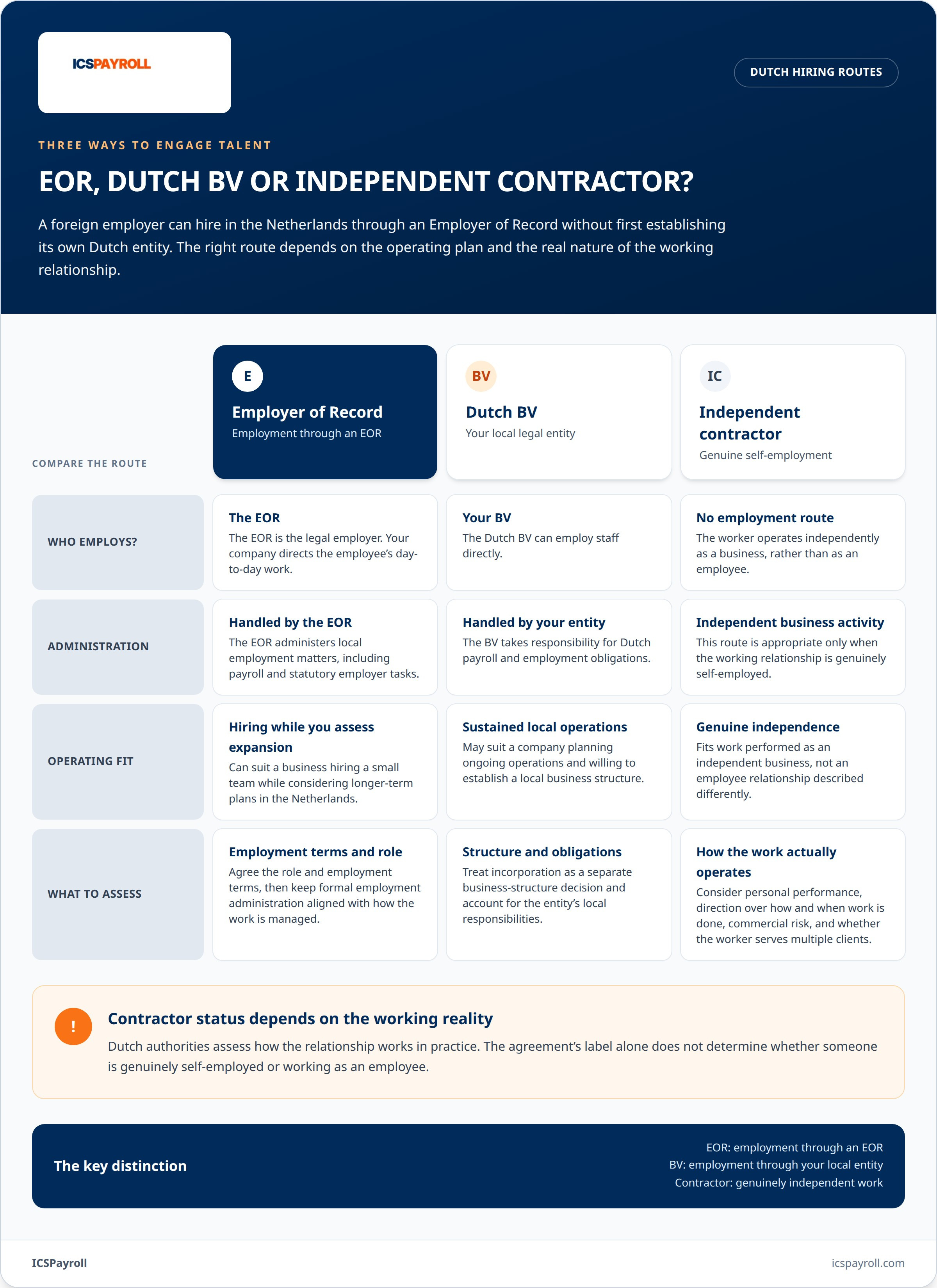
Employer registration and business structures
A foreign employer can hire Dutch employees through a foreign entity or a Dutch structure. The arrangement determines which organisation employs the worker, handles payroll and reports Dutch wage tax. Incorporation is not the only route: an employer may use an EOR, while a company with a local presence may employ staff through a Dutch branch or BV.
When an employer hires personnel for the first time, it must register with the Netherlands Tax Administration. Payroll administration covers salary payments, wage tax withholding and applicable social security contributions. The payroll tax return is due by the last day of the following month. Registration and reporting responsibilities depend on the employment structure and the company’s activities in the Netherlands.
A Dutch BV is incorporated locally, registered in the Dutch trade register, and treated as a Dutch resident taxpayer. It is not a permanent establishment of a foreign company. Setting up a BV can take several weeks to several months. The client’s stated setup cost is €2000, with ongoing accounting and filing typically EUR 3,000-8,000/year all-in. This route may suit a company planning sustained operations and direct local employment.
A Dutch-registered branch remains part of the foreign company, but it is registered in the Dutch trade register. If it employs staff, the branch is the employer responsible for withholding Dutch wage tax and social security contributions. A foreign company can also have a Dutch permanent establishment without registering a Dutch entity. That tax presence may create local payroll obligations, so the legal structure and actual business activities need separate consideration.
For a company employing through its own Dutch structure, the employer also budgets for applicable payroll premiums and insurance-related contributions. In 2026, the employer-paid Zvw contribution is 6.10% of income up to €79,409, according to the Staatscourant. This is a payroll contribution, not a substitute for deciding which entity employs the worker. The applicable payroll treatment depends on the employer and employment arrangement.
An EOR is another option: the EOR employs the worker, while the foreign company directs the work. This can support hiring before the company establishes a BV or branch. By contrast, a contractor agreement does not make a freelancer an employee or establish that they are genuinely self-employed. Dutch authorities assess the real working relationship, including direction, personal performance, commercial risk and whether the worker has multiple clients.
Choose a structure based on the intended business presence, the employee’s role, and who will administer salary and reporting. A foreign employer hiring a Dutch employee through an EOR has a different registration model from a company establishing a BV to employ staff directly. In either case, the employment arrangement and payroll treatment should match how the work is actually performed.
What steps and documents are required to onboard and pay an employee in the Netherlands?
An EOR onboarding file brings together the employee’s identity, employment terms, work eligibility and payroll details. The foreign company provides role and compensation information; the employee provides the identity documents and personal details needed for employment administration.
Employment terms: The EOR needs the agreed job title, responsibilities, start date, working hours, salary and contract duration. It also needs the reporting relationship and relevant workplace details. These details allow the employment documents to reflect the role agreed by the company and employee.
Identity and work eligibility: Before employment begins, employers must establish the worker’s identity and right to work in the Netherlands. Identity verification uses an original document, such as a passport. The employee’s nationality and residence status affect which work authorisation applies, so the onboarding file should reflect their actual status.
Payroll information: Accurate employee and compensation details support correct payroll processing. The EOR needs the agreed salary and payment arrangements, along with the information required to establish a payroll record. Share changes to agreed pay or working hours before payroll is processed so the employment record and salary calculation remain aligned.
Written employment information: Employers must provide certain employment details in writing within one week and within one month after the employee starts work. The EOR prepares the relevant employment documentation using the agreed terms. A clear handover of role, pay and start-date information helps keep the documents consistent with the employment arrangement.
Timing and completeness: Payroll registration and onboarding administration typically add three to five business days after candidate selection. EOR onboarding timing can vary after provider selection and agreement. These refer to different stages of the process. Timing depends on when the agreement is finalised and whether employee details and documents are complete and consistent.
For example, if a candidate’s passport details differ from the information supplied for the employment record, the discrepancy needs to be resolved before administration can proceed accurately. A late change to the start date or salary may also require updated documents and payroll details. Clear, timely information from the company and employee helps the EOR coordinate contract preparation, work eligibility checks and payroll setup.
To coordinate Dutch employee onboarding and payroll administration, discuss your onboarding requirements.
The required work authorisation depends on the employee’s nationality and residence status. Before employment begins, the employer must verify the employee’s identity and right to work in the Netherlands.
ICSPayroll
ICSPayroll helps foreign employers hire in the Netherlands through compliant local employment administration. Its Employer of Record (EOR) service employs Dutch-based staff for companies without a local entity. For companies with their own Dutch entity, Dutch Payroll Administration covers payroll processing for their employees. The right route depends on who will employ the worker and handle local payroll responsibilities.
For eligible international employees, ICSPayroll also manages the 30% Ruling Application process. This can be relevant when hiring from abroad and considering Dutch tax advantages alongside employment and payroll arrangements.
If you’re planning to hire in the Netherlands, contact ICSPayroll to discuss your requirements.
Plan Your Next Hiring Decision
For a company hiring employees in the Netherlands without an entity, the next decision is how the arrangement supports its plans in the country. Consider the role, the level of day-to-day direction and how the company expects its Dutch operations to develop. These priorities can help shape a suitable employment approach.
Set a clear operating model before moving forward. Decide who will direct the employee’s work, who will coordinate employment administration and how changes to the role or compensation will be communicated. Agreeing these points early helps align responsibilities with how the work will happen in practice.
ICSPayroll can discuss your Dutch hiring plans and the employment support that fits your situation. Contact ICSPayroll to discuss your hiring plans, and take the next step with a clear basis for your decision.
Frequently Asked Questions
Hiring Employees in the Netherlands Without a Local Entity: Is Payrolling the Solution?
Payrolling can suit a company that needs an intermediary to employ a Dutch-based worker. The hiring company directs the work, while the intermediary handles the employment relationship and payroll. This differs from Dutch Payroll Administration, where a company with its own Dutch entity remains the employer and outsources payroll processing. The key question is who will legally employ the person, not simply who calculates their salary.
What Does a Company Need to Hire Employees in the Netherlands?
A company needs a defined employment arrangement, agreed role and pay terms, and the information required to establish the employee’s identity and work eligibility. It should also consider whether a sector collective labour agreement (CAO) applies. The relevant CAO may affect employment conditions, and a sector pension arrangement may create additional requirements. These considerations help ensure the employment terms fit the position and applicable sector rules.
When should you consider transitioning to a Dutch BV?
Consider a Dutch BV when hiring in the Netherlands becomes part of a consistent, longer-term local operation. A market analysis cited for this topic suggests considering an entity when a company consistently employs ten or more people in the Netherlands. This is a planning indicator, not an automatic legal threshold. The decision also depends on tax consequences, the company’s activities and whether direct local operations justify maintaining a Dutch structure.
How does Dutch dismissal law work and how does an EOR help?
Dutch employment contracts can be terminated through a valid UWV procedure, a court procedure or a mutual termination agreement. A transition payment is mandatory in most dismissal cases. An EOR can administer the employment relationship and coordinate the employer-side process, but its involvement does not remove applicable dismissal rules. The appropriate route depends on the circumstances and legal basis for ending employment.
Is EOR (payrolling) legal and regulated in the Netherlands?
Yes. Third-party allocation of workers is governed by WAADI, and payrolling has specific employment-condition requirements under the WAB, which has applied since January 2020. Payrolled workers must receive the same employment conditions as comparable direct employees for pension and other secondary conditions. An EOR arrangement must operate as described in practice; calling a worker a contractor does not make an employment relationship independent.
So how does this work in practice?
First, the company selects its candidate and agrees the role, salary, start date and working arrangements. It then aligns the EOR’s employment responsibilities with the company’s day-to-day management of the role. The EOR prepares the employment administration and payroll record using the agreed information. For example, a company hiring a specialist can set project priorities while the EOR administers the formal employment relationship.
Can a foreign company hire employees in the Netherlands without establishing a Dutch entity?
Yes. Hiring employees in the Netherlands without an entity is possible through an employment arrangement such as an EOR. A foreign company may also employ through its own foreign entity, but Dutch payroll obligations can still apply. A Dutch permanent establishment may trigger local payroll registration even without a registered Dutch company. The employee’s activities and the foreign company’s tax presence therefore matter alongside its incorporation structure.
How does an employer of record (EOR) hire employees in the Netherlands?
An EOR becomes the legal employer for a Dutch-based hire and administers the formal employment relationship. The client company identifies the role, selects the candidate and directs the employee’s day-to-day activities. The EOR uses the agreed employment terms and employee information to prepare employment administration and payroll. This arrangement lets the company manage its work while the EOR handles its assigned employer responsibilities.

Article by
Joost Hubregtse
Joost Hubregtse is Director of ICS Staffing & Payroll B.V., the wholly owned subsidiary of Intercompany Solutions behind ICS Payroll. He is responsible for Employer of Record and Dutch payroll services: employment contracts, wage tax and social security filings, holiday allowance, pension, sick leave and CAO compliance, with onboarding possible within 48 hours.
Frequently Asked Questions
Payrolling can suit a company that needs an intermediary to employ a Dutch-based worker. The hiring company directs the work, while the intermediary handles the employment relationship and payroll. This differs from Dutch Payroll Administration, where a company with its own Dutch entity remains the employer and outsources payroll processing. The key question is who will legally employ the person, not simply who calculates their salary.
A company needs a defined employment arrangement, agreed role and pay terms, and the information required to establish the employee’s identity and work eligibility. It should also consider whether a sector collective labour agreement (CAO) applies. The relevant CAO may affect employment conditions, and a sector pension arrangement may create additional requirements. These considerations help ensure the employment terms fit the position and applicable sector rules.
Consider a Dutch BV when hiring in the Netherlands becomes part of a consistent, longer-term local operation. A market analysis cited for this topic suggests considering an entity when a company consistently employs ten or more people in the Netherlands. This is a planning indicator, not an automatic legal threshold. The decision also depends on tax consequences, the company’s activities and whether direct local operations justify maintaining a Dutch structure.
Dutch employment contracts can be terminated through a valid UWV procedure, a court procedure or a mutual termination agreement. A transition payment is mandatory in most dismissal cases. An EOR can administer the employment relationship and coordinate the employer-side process, but its involvement does not remove applicable dismissal rules. The appropriate route depends on the circumstances and legal basis for ending employment.
Yes. Third-party allocation of workers is governed by WAADI, and payrolling has specific employment-condition requirements under the WAB, which has applied since January 2020. Payrolled workers must receive the same employment conditions as comparable direct employees for pension and other secondary conditions. An EOR arrangement must operate as described in practice; calling a worker a contractor does not make an employment relationship independent.
First, the company selects its candidate and agrees the role, salary, start date and working arrangements. It then aligns the EOR’s employment responsibilities with the company’s day-to-day management of the role. The EOR prepares the employment administration and payroll record using the agreed information. For example, a company hiring a specialist can set project priorities while the EOR administers the formal employment relationship.
Yes. Hiring employees in the Netherlands without an entity is possible through an employment arrangement such as an EOR. A foreign company may also employ through its own foreign entity, but Dutch payroll obligations can still apply. A Dutch permanent establishment may trigger local payroll registration even without a registered Dutch company. The employee’s activities and the foreign company’s tax presence therefore matter alongside its incorporation structure.
An EOR becomes the legal employer for a Dutch-based hire and administers the formal employment relationship. The client company identifies the role, selects the candidate and directs the employee’s day-to-day activities. The EOR uses the agreed employment terms and employee information to prepare employment administration and payroll. This arrangement lets the company manage its work while the EOR handles its assigned employer responsibilities.